

No products in the cart.
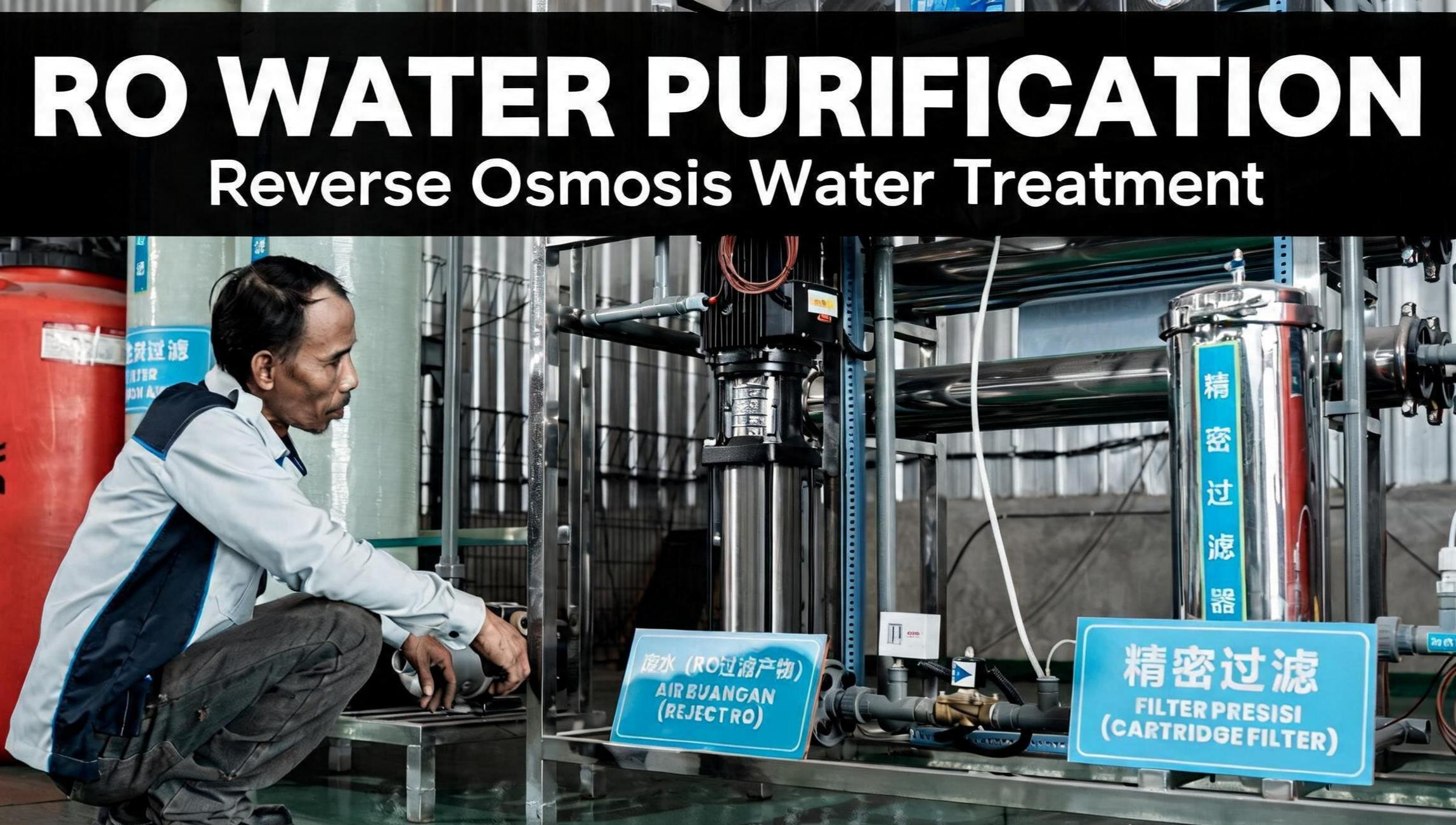
How It Works and Why It Matters : The Deep Science Behind RO Water Purification
Access to pure water is critical for public health and modern industrial manufacturing. While traditional filters can trap large dirt particles, they often fail to remove dissolved invisible threats. Microscopic salts, heavy metals, and chemical compounds can easily slip through basic sand filters. To remove these molecular impurities, facilities rely on ro water purification.
Using advanced membrane technology, ro water purification changes how we clean water. It pushes liquid down to the molecular level, leaving only pure water molecules behind.
In this comprehensive guide, we will break down the process of reverse osmosis, look at its main components, and explain why it is vital for global industries.
What is Reverse Osmosis?
To understand ro water purification, we must first look at how nature behaves. In regular osmosis, water naturally flows across a semipermeable membrane from a low salt concentration to a high salt concentration. It does this until both sides are equally balanced.
Reverse osmosis completely flips this natural process:
[High Salt Water] + (High Pressure Pump) ➡️ [Semipermeable Membrane] ➡️ [Pure Water Out]
By using heavy-duty, high-pressure pumps, systems force raw contaminated water against its natural flow. The liquid passes through a highly advanced synthetic membrane. This membrane catches the tiniest dissolved solids while letting fresh, crystal-clear water flow to the other side.
The Multi-Stage RO Water Purification Process
A reliable ro water purification network does not use the membrane alone. Raw water contains rough minerals that can clog or tear delicate RO layers. To prevent this, systems use a series of progressive stages to protect the equipment and guarantee pure output.
1. Pre-Filtration Stage (Sediment & Carbon)
Before touching the main RO unit, raw water passes through physical pre-filters.
Sediment Filters: These trap sand, mud, rust, and suspended debris down to 5 microns.
Activated Carbon Blocks: These adsorb chlorine and volatile organic chemicals. This step is critical because chlorine can chemically burn and destroy synthetic RO membranes.
2. Anti-Scalant Dosing.
In commercial and industrial plants, water often contains heavy amounts of calcium and magnesium. Systems inject special anti-scalant food-grade chemicals into the stream. This prevents hard scale minerals from binding together and choking the membrane surface.
3. The Main RO Membrane Phase
This is where the true purification happens. Driven by powerful pumps, water meets a spiral-wound semipermeable membrane layer. The pores on an RO membrane measure roughly 0.0001 microns. For comparison, a single human hair is about 75 microns wide, and a standard bacterium is 1 micron wide.
As water is pressed against this layer:
Permeate (Clean Stream): Pure water molecules pass through the microscopic pores and are sent to a clean storage tank.
Concentrate (Reject Stream): Dissolved salts, heavy metals (like lead and arsenic), fluorides, and microplastics cannot pass. They are continuously washed away into a waste line to keep the membrane clean.
4. Post-Filtration & Remineralization
Because ro water purification is incredibly efficient, it removes almost all minerals—even good ones like potassium and calcium. In drinking water configurations, the pure stream passes through a final carbon polishing filter to enhance taste, and small amounts of beneficial minerals are added back to balance the pH level.
Industrial vs. Commercial RO Systems
While the core science remains exactly the same, the engineering layout changes drastically based on the operational demand.
COMMERCIAL SCALE
Fits inside offices and hotels
Processes 500 – 5,000 gallons
Focuses on taste & appliance life
INDUSTRIAL SCALE
Requires dedicated factory floors
Processes 100,000+ gallons daily
Focuses on precise water chemistry
Commercial RO Frameworks
These compact configurations are built for hotels, restaurants, large corporate offices, and central laboratories. They are designed to fit into tight utility rooms, providing pure water for drinking stations, kitchen food preparation, and central boiler units to prevent internal scale buildup.
Industrial RO Plants
Industrial setups are massive, high-throughput systems designed for continuous 24/7 operations. Industries like semiconductor manufacturing, pharmaceuticals, and power generation cannot afford water impurities. These plants use multi-stage, double-pass RO configurations coupled with electronic monitoring systems to maintain near-zero electrical conductivity in the water.
Why Businesses Invest in RO Technology
Implementing an automated ro water purification system provides clear, measurable business advantages:
Protects Expensive Assets: Eliminating dissolved solids keeps pipes, boilers, and cooling systems free from hard scale, reducing maintenance costs.
Guarantees Product Quality: For food, beverages, and cosmetics, using uniform, purified water ensures consistent taste, color, and chemical stability across batches.
Drives Sustainability: Modern industrial systems feature brine-recovery setups that recycle the reject stream for secondary uses like facility washing, lowering overall water utility costs.
Regulatory Compliance: It easily brings wastewater or process water into alignment with strict local environmental discharge limits.
Future Trends in Reverse Osmosis Tech
Energy Recovery Devices (ERDs): High-pressure pumps consume significant electricity. Modern industrial plants use ERDs to capture the hydraulic pressure from the waste reject stream and redirect it to power the inlet pumps, cutting electricity usage by up to 30%.
Anti-Fouling Coatings: Researchers are designing advanced membrane coatings that naturally repel organic substances and bacteria, reducing the frequency of chemical cleaning cycles.
Solar-Powered Units: Compact, containerized RO systems powered by solar grids are being deployed to remote coastal areas, turning salty seawater into drinking water without relying on local power grids.
Conclusion
Advanced ro water purification remains the gold standard for creating safe, reliable, and ultra-pure streams from unpredictable raw water sources. By combining effective pre-treatment methods with tight semipermeable membranes, businesses can protect their machinery, secure product consistency, and build long-term sustainable water operations.
Comment
Christine Eve
It has survived not only five centuries, but also the leap into electronic typesetting unchanged. It was popularised in the sheets containing lorem ipsum is simply free text.