The Ultimate Guide to Modern Water Purification Systems: Tech, Uses, and Benefits
Water is the foundation of global health and industrial progress. Every day, communities, factories, and commercial hubs require billions of gallons of clean water. However, raw water from rivers, wells, or city lines is rarely pure enough for direct use. It often contains minerals, chemicals, and microscopic pathogens. To solve this, we rely on advanced water purification systems.
A reliable water purification systems setup does more than just filter out visible dirt. It alters the chemical and biological structure of water. It ensures the final stream meets strict safety and quality metrics.
In this comprehensive guide, we will break down how these systems work, explore the core engineering behind them, and detail their critical roles across various sectors.
Why High-Grade Purification is Essential
Raw water is a universal solvent. As it flows through the earth, it picks up everything in its path. This includes harmless minerals, industrial chemicals, and biological contaminants.
Using unpurified water triggers immediate operational risks, including:
Equipment Scaling: Hard minerals like calcium form thick crusts inside boilers and pipes, causing expensive system failures.
Product Spoilage: Contaminated water alters the taste, shelf-life, and safety of food, beverages, and pharmaceuticals.
Health Threats: Pathogens and heavy metals pose severe risks to employees, consumers, and communities.
Investing in robust water purification systems creates a protective barrier. It secures your operational consistency and safeguards public health.
Core Technologies in Purification Systems
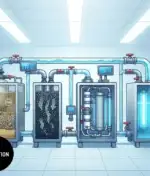
Modern purification lines do not rely on a single filter. Instead, they combine multiple specialized technologies to target different types of impurities.
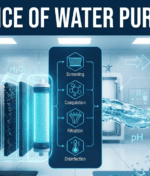
[Raw Water In] ➡️ [Media Filter] ➡️ [Activated Carbon] ➡️ [Reverse Osmosis] ➡️ [UV / Ozone] ➡️ [Ultra-Pure Water Out]
1. Multi-Media Filtration
This is the first line of defense in most water purification systems. Raw water passes through a pressurized tank filled with graded layers of anthracite, silica sand, and garnet. These media beds physically trap suspended solids, mud, and rust down to about 15 microns.
2. Activated Carbon Adsorption
Carbon filters use highly porous charcoal blocks to attract dissolved chemicals. As water passes through, chlorine, volatile organic compounds (VOCs), pesticides, and unpleasant odors stick to the carbon surface. This stage is vital for protecting downstream membranes from chemical damage.
3. Reverse Osmosis (RO) Membranes
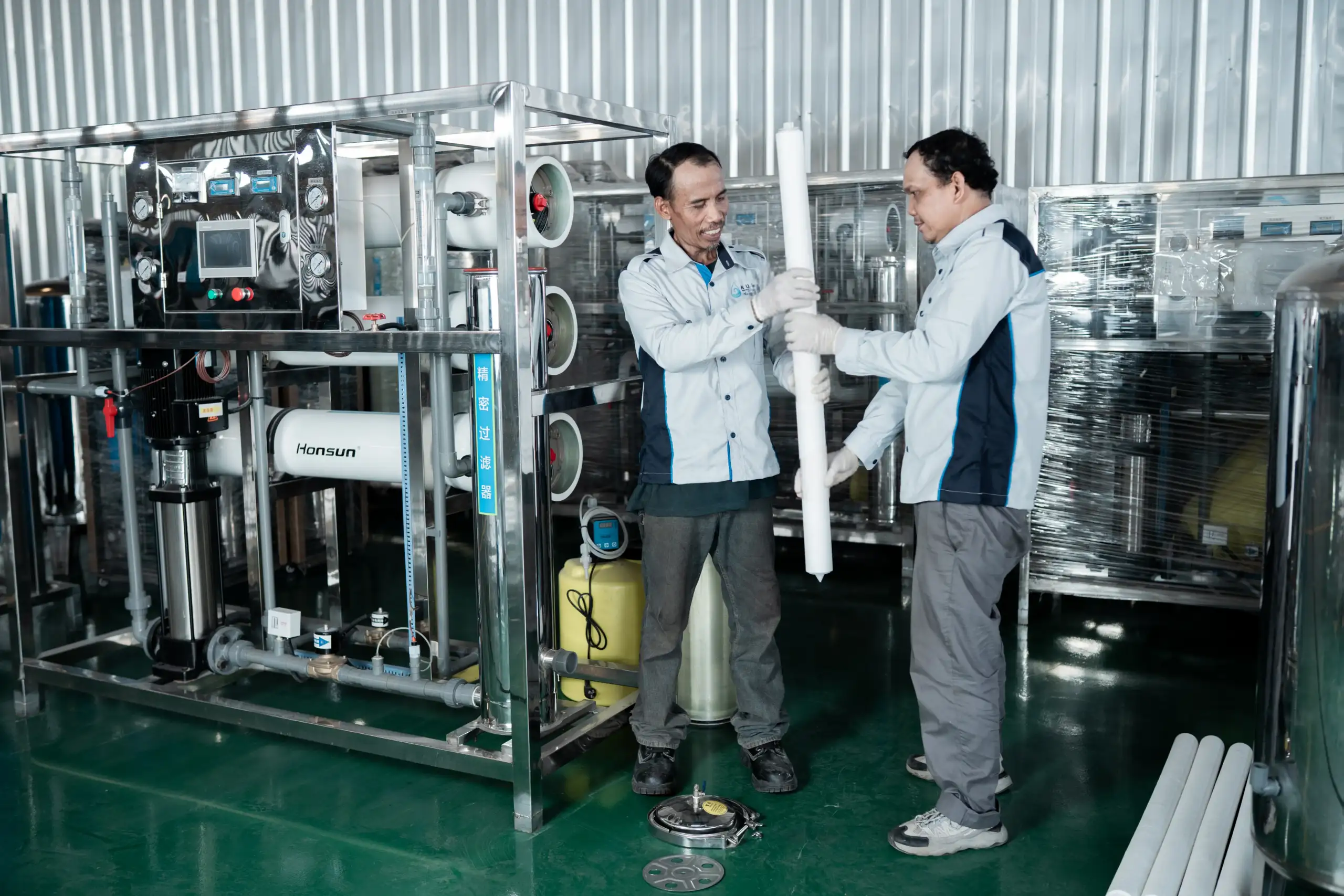
Reverse Osmosis is the heart of advanced purification. High-pressure pumps force water through a semipermeable membrane with microscopic pores measuring 0.0001 microns. This tight barrier rejects up to 99% of dissolved salts, heavy metals, microplastics, and viruses, allowing only pure water molecules to pass.
4. Ultrafiltration (UF)
UF serves as an alternative or a pre-treatment step for RO. It uses hollow-fiber membranes to strain out fine colloids, proteins, and bacteria while keeping beneficial minerals dissolved. It runs at lower pressures, saving significant energy.
5. UV and Ozone Sterilization
The final step focuses on microbiological safety. Instead of adding harsh chemicals, systems pass water under high-intensity ultraviolet (UV) lamps or dose it with ozone gas. This instantly neutralizes bacteria and viruses without altering the water’s chemical balance.
Comparing Purification Scales and Setups
Commercial Systems
These setups serve hospitality, offices, and restaurants. They prioritize removing hardness minerals, chlorine, and biological risks. A typical commercial setup uses compact, skid-mounted RO units and UV lamps to deliver clean water for kitchens, ice machines, and central HVAC cooling towers.
Industrial Systems
Industrial plants require massive, continuous volumes of ultra-pure water. Sectors like electronics, pharmaceuticals, and power generation use complex, multi-stage systems. These setups incorporate continuous deionization (EDI) and double-pass RO membranes to drive Total Dissolved Solids (TDS) levels down to near zero.
Municipal Systems
City-wide water networks process millions of gallons daily. They combine large sedimentation basins, rapid sand filters, and massive disinfection lines to provide safe municipal tap water directly to urban homes.
The Business Benefits of Upgrading Your System
Upgrading your facility’s water infrastructure yields immediate financial and operational returns.
Extended Asset Lifespan: Removing scale-forming minerals protects boilers, chillers, and washing systems from premature corrosion, reducing downtime.
Lower Operating Expenses: Modern systems feature energy-recovery pumps and low-fouling membranes, which cut electricity and chemical usage.
Guaranteed Compliance: Automated monitoring keeps your output aligned with local environmental laws and health standards, avoiding penalties.
Reduced Water Footprint: Advanced configurations recycle reject streams for secondary purposes like irrigation, lowering utility bills.
Future Trends in Purification Tech
The water purification systems sector is evolving rapidly to address climate shifts and resource scarcity.
Bio-Mimetic Membranes: Scientists are developing new membranes that mimic natural cellular structures. These filters allow water to pass faster while resisting mineral buildup, extending membrane life.
AI-Driven Automated Dosing: Modern systems use cloud-connected IoT sensors to monitor real-time water quality. Artificial intelligence analyzes this data to automatically adjust pressures and chemical dosing, maximizing efficiency.
Zero Liquid Discharge (ZLD): Advanced industrial configurations treat and recycle 100% of their internal wastewater, leaving only solid dry crystals for disposal and eliminating liquid waste entirely.
Conclusion
Investing in dependable water purification systems is a critical step for modern businesses and industries. By implementing a customized, multi-stage filtration strategy, you protect your infrastructure, reduce operational waste, and ensure a steady supply of high-purity water. As resource scarcity increases, smart water management will define the most resilient and successful enterprises worldwide.

Comment
Christine Eve
It has survived not only five centuries, but also the leap into electronic typesetting unchanged. It was popularised in the sheets containing lorem ipsum is simply free text.