
How a Modern Wastewater Treatment Plant Works: The Ultimate Guide to Clean Water Technology
Water is the lifeblood of our planet. Every day, global households, massive industrial complexes, and commercial businesses generate billions of gallons of dirty water. Have you ever wondered where all that water goes after it disappears down your drain, toilet, or factory floor? It does not just vanish. Instead, it travels through vast underground networks to reach a wastewater treatment plant.
A modern wastewater treatment plant is a highly engineered facility designed to clean contaminated water, making it safe to re-enter local ecosystems or be reused for industrial and agricultural activities. Without these facilities, our rivers, lakes, and oceans would quickly become toxic dead zones, triggering severe public health crises.
In this comprehensive guide, we will break down the inner workings of a wastewater treatment plant, explore its core stages, and discuss why this technology is vital for sustainable water management.
Why Wastewater Treatment Matters More Than Ever
As global populations expand and industrial activities accelerate, the stress on our fresh water supply reaches historic levels. Traditional freshwater sources are depleting faster than nature can replenish them. This reality shifts the perspective on used water: it is no longer viewed as waste, but rather as a valuable resource waiting to be reclaimed.
Discharging untreated sewage or industrial chemical runoff directly into nature causes immediate disasters, including:
- Eutrophication: Nutrient overloads (like phosphorus and nitrogen) cause massive algal blooms that suffocate aquatic life.
- Waterborne Diseases: Pathogens like cholera, dysentery, and E. coli spread rapidly through contaminated water systems.
- Soil Contamination: Toxic heavy metals from industrial factories can permanently ruin agricultural land.
By routing used streams through a dedicated wastewater treatment plant, we create a protective barrier between human waste and our fragile environment.
The Step-by-Step Wastewater Treatment Process
Transforming highly toxic sludge into crystal-clear water requires a precise sequence of physical, biological, and chemical processes. Let us walk through the four main evolutionary stages that occur inside a standard wastewater treatment plant.
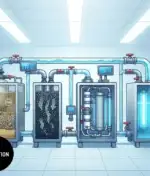
[Raw Sewage In] ➡️ [Preliminary: Screening] ➡️ [Primary: Settling Tanks] ➡️ [Secondary: Bacteria Aeration] ➡️ [Tertiary: UV/Chlorine] ➡️ [Clean Water Out].
1. Preliminary Treatment: Removing the Heavy Trash
The moment raw sewage flows into a wastewater treatment plant, it encounters the mechanical screening stage. This phase protects the plant’s sensitive internal machinery from physical blockages.
- Bar Screening: Large vertical metal bars catch big debris such as plastic bottles, rags, wood, wipes, and domestic trash.
- Grit Removal: Next, the water flows into grit chambers where heavy, abrasive materials like sand, gravel, and coffee grounds settle out. Removing grit prevents premature wear and tear on downstream pumps and pipes.
2. Primary Treatment: Physical Sedimentation
Once the large trash is gone, the water enters massive, circular concrete structures known as primary clarifiers or settling tanks.
During this phase, gravity does most of the heavy lifting. The water is held in these tanks for several hours under calm conditions. Suspended organic solids gradually sink to the bottom, forming a thick layer of raw sludge. Meanwhile, lighter substances like household grease, industrial oils, and plastics float to the surface. Mechanical skimmers sweep the top oil away, while bottom scrapers collect the settled sludge for independent processing. This stage eliminates roughly 60% of suspended solids from the stream.
3. Secondary Treatment: The Biological Miracle
While the water looks much cleaner after primary settling, it still contains invisible, dissolved organic matter, sugars, and nutrients. The wastewater treatment plant utilizes millions of microscopic heroes—beneficial bacteria and microorganisms—to break down these invisible pollutants.
- The Aeration Tank: The water is pumped into deep aeration basins where giant blowers continuously inject oxygen into the liquid. This rich oxygen environment supercharges the bacteria, causing them to rapidly consume the dissolved organic waste.
- Secondary Clarification: The mixture then flows into secondary settling tanks. Here, the well-fed bacteria clump together into heavy particles called “activated sludge” and sink to the bottom. A portion of this helpful bacterial sludge is recycled back to the aeration tank to keep the cycle going, while the rest is removed.
4. Tertiary and Advanced Treatment: Fine Polishing
At this stage, the water is nearly 95% clean. However, to meet strict environmental regulations for safe river release or municipal reuse, it must undergo advanced polishing.
- Micro-Filtration: The water passes through sophisticated sand media or ultra-fine membranes to catch any lingering microscopic particles.
- Chemical/UV Disinfection: Before leaving the wastewater treatment plant, the water must be completely sterilized. Most modern plants avoid harsh chemicals by exposing the water stream to high-intensity Ultraviolet (UV) light lamps, which instantly scramble the DNA of harmful viruses and bacteria. Alternatively, chlorine dosing is used, followed by a dechlorination process to safeguard downstream river wildlife.
Industrial vs. Municipal Wastewater Treatment Plants
Not all wastewater is created equal. Therefore, a wastewater treatment plant must be tailored specifically to the type of waste stream it receives.
Municipal Plants (City Sewage)
These facilities handle predictable, high-volume biological waste originating from household bathrooms, kitchens, and commercial buildings. Their core engineering focus revolves around natural biological digestion and removing nutrients like nitrogen and phosphorus to prevent environmental algae spikes.
Industrial Plants (Factory Runoff)
Factories producing textiles, chemicals, pharmaceuticals, or food and beverages cannot send their wastewater straight to a city plant. It contains specialized chemical pollutants that would kill the city’s helpful bacteria. Industrial facilities utilize highly specialized pre-treatment plants to neutralize extreme pH levels, extract heavy metals, break down synthetic dyes, and isolate complex oils before the water can be safely discharged.
Turning Waste into Wealth: The Circular Economy
A progressive trend in modern wastewater treatment plant engineering is resource recovery. Instead of operating as a linear disposal site, a contemporary facility acts as a green refinery that harvests valuable assets from waste streams.
- Biogas Production: The organic sludge collected during the primary and secondary phases is placed into sealed, oxygen-free tanks called anaerobic digesters. Heated bacteria break down this sludge, generating methane gas. Plants capture this biogas to run generators, creating green electrical power that can run the entire facility off-grid.
- Biosolids for Fertilizer: Once the sludge is thoroughly digested and sterilized, it turns into nutrient-rich organic matter. This material is dewatered, dried, and sold to farms as premium, eco-friendly agricultural fertilizer.
- Industrial Water Recycling: Many water-stressed cities use advanced tertiary treatment to purify effluent so thoroughly that it can be routed directly back to manufacturing plants for industrial cooling towers, saving millions of gallons of pristine groundwater.
Conclusion
The humble wastewater treatment plant is one of humankind’s greatest achievements in public health and environmental stewardship. By transforming hazardous municipal and industrial waste back into a clean, life-supporting element, these facilities protect biodiversity, secure agricultural industries, and unlock reliable new water sources through recycling.
As we look toward a future shaped by climate change and resource scarcity, investing in robust wastewater infrastructure is not just a regulatory chore—it is an absolute necessity for building resilient, sustainable communities worldwide.
Build a Sustainable Industrial Water Ecosystem for Your Business
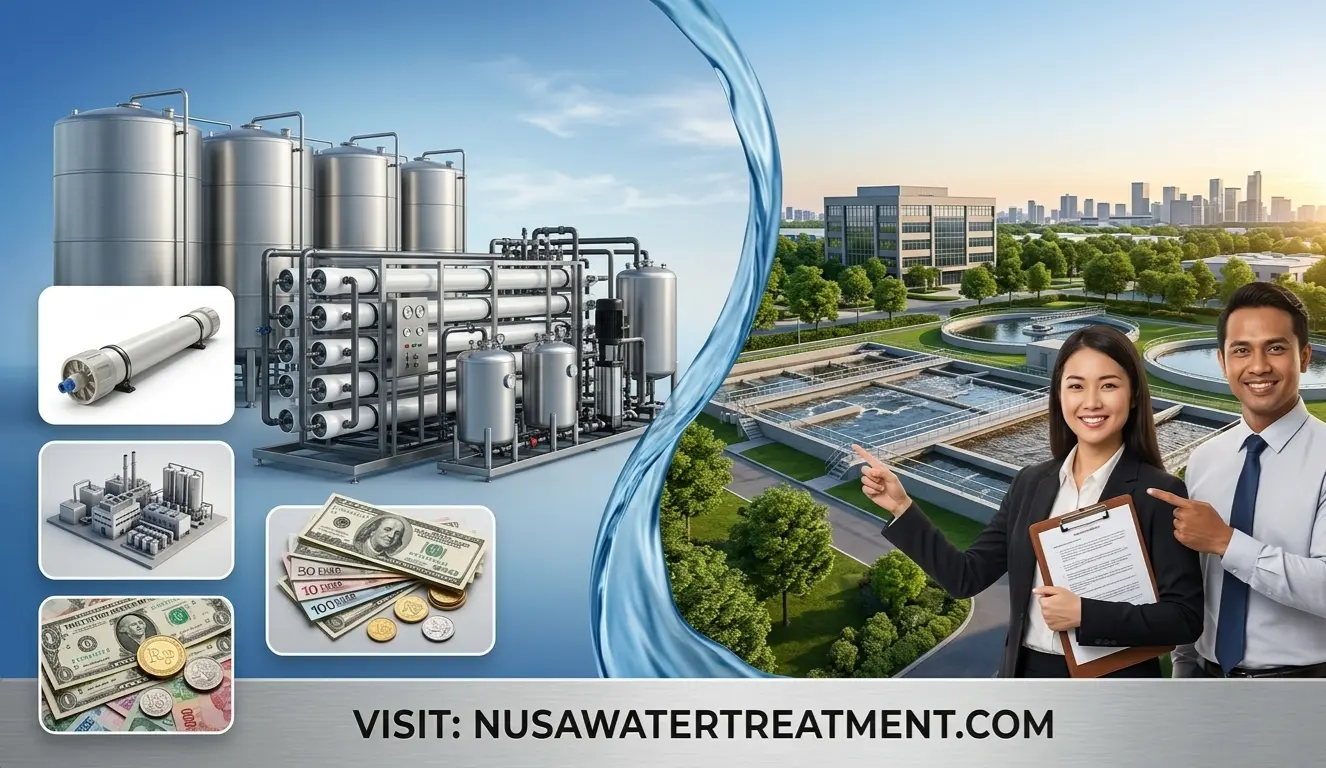
Managing an efficient, regulatory-compliant water network requires more than generic hardware. It demands precision engineering tailored to your specific local water challenges—whether you are dealing with high-salinity brackish water, heavy iron saturation, or complex industrial chemical effluents.
If you are ready to optimize your corporate water infrastructure, reduce operational downtime, and lower utility costs, Nusa Water Treatment is your ultimate engineering partner.
As an established expert in custom industrial purification across Indonesia, they deliver complete, one-stop ecosystems featuring:
- Tailored Engineering Designs: Systems built from scratch based on local raw water laboratory analysis.
- Industry 4.0 Smart Operations: Fully automated controls for seamless, low-maintenance 24/7 continuous flows.
- Comprehensive Lifetime Support: From professional on-site surveys and heavy-duty installations to routine digital remote monitoring, cleaning, and premium component replacements.
Transform your wastewater management into a high-efficiency resource recovery cycle today.
👉 [Visit Nusa Water Treatment](https://nusawatertreatment.com/) to request your free strategic analysis and custom engineering consultation!

Comment
Christine Eve
It has survived not only five centuries, but also the leap into electronic typesetting unchanged. It was popularised in the sheets containing lorem ipsum is simply free text.