
Beyond the Basics: Navigating the Next Era of Industrial Water Treatment Systems
Water scarcity and stringent environmental regulations have pushed standard filtration methods past their limits. In the modern industrial landscape, a water treatment system is no longer a luxury infrastructure element. It is a critical operational safeguard. While most standard guides focus on basic physical filtration or standard reverse osmosis, true operational resilience lies in addressing hidden inefficiencies. These include advanced chemical management, system automation, and high-efficiency water reuse.
This comprehensive guide skips surface-level definitions. Instead, it explores the specialized design strategies, emerging contaminant mitigation, and economic balancing required to build a world-class water treatment system.
1. Deconstructing the Dynamic Blueprint of a Modern Water Treatment System
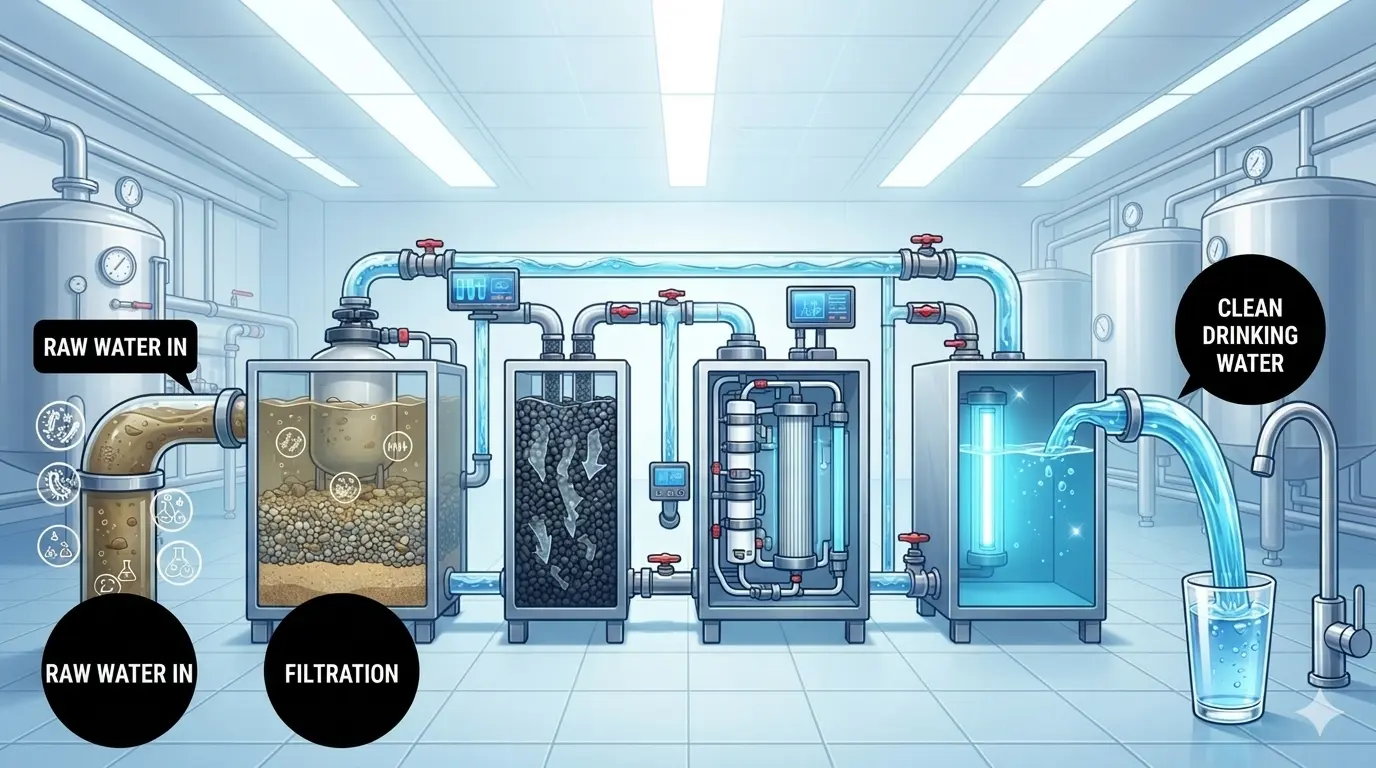
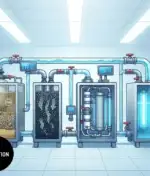
Every effective water treatment system operates as a synchronized train of chemical, physical, and biological barriers. Understanding the precise interplay between these components helps operators identify bottlenecks before they trigger system downtime.
Pretreatment Optimization: Protecting the Core Asset
Pretreatment is the most critical defense line in any advanced setup. Standard operations rely blindly on sand filters. However, modern high-efficiency facilities deploy automated multi-media filtration and ultrafiltration (UF) loops.
- Targeted Coagulation : Injecting precise dosages of polyaluminum chloride (PAC) destabilizes colloidal particles. This step transforms micro-debris into larger flocs.
- The Role of Ultrafiltration : UF membranes act as an absolute barrier against suspended solids, bacteria, and macromolecules. This step is essential before water reaches high-pressure membranes.
- Scaling Mitigation : Without optimal pretreatment, downstream components experience irreversible mineral scaling and organic fouling. This reduces the lifespan of expensive membranes by up to 60%.
Advanced Membrane Technology : Beyond Standard Reverse Osmosis
Once water passes the pretreatment phase, it enters the molecular separation stage. Standard setups treat reverse osmosis (RO) as a one-size-fits-all solution. In contrast, optimized industrial loops integrate specialized membrane variations to achieve maximum purity with minimal energy consumption.
Nanofiltration (NF) : NF membranes targetedly reject multivalent ions (like calcium and magnesium sulfate) while allowing monovalent ions to pass. This provides an energy-efficient alternative for targeted water softening.
Low-Fouling RO Membranes : Designed with hydrophilic surface chemistries, these specialized membranes prevent organic matter from adhering to the surface. This maintains steady flux rates even during high-load processing.
Electrodeionization (EDI) : For electronics manufacturing or high-pressure boiler feed applications, an EDI module follows the RO system. EDI uses electricity, ion-exchange membranes, and resin to continuously deionize water without requiring harsh chemical regeneration.
2. Solving the Overlooked Efficiency Killers in Water Infrastructure
Most industrial facilities lose thousands of dollars annually to invisible inefficiencies within their water treatment system. Addressing these systemic issues transforms water processing from a costly drain into a lean, predictable operation.
Biofilm Defense Strategies : Eradicating the Invisible Insulator
Biofilms are complex matrices of microorganisms that adhere to pipes and membrane surfaces. Unlike simple scale, biofilms act as highly efficient thermal and physical insulators, forcing high-pressure pumps to work significantly harder.
The Biocide Balancing Act :
Over-relying on chlorine can degrade polyamide RO membranes through oxidation. Modern operations switch to chlorine dioxide or ozone. These compounds provide stronger disinfection without generating toxic trihalomethanes.
Enzymatic Dispersion:
Implementing periodic enzymatic clean-in-place (CIP) cycles targets the extracellular polymeric substances (EPS) protecting the bacteria. This allows standard biocides to penetrate and destroy the colony completely.
Energy Recovery and Hydraulic Balance
Pumping water through multi-stage membrane loops requires massive amounts of electrical energy. Optimizing hydraulic configurations directly impacts your facility’s baseline operating expenditure.
Isobaric Energy Recovery Devices (ERDs):
These systems capture the high-pressure energy remaining in the RO reject stream. They transfer that energy directly to the incoming feed water, reducing pump energy consumption by up to 45%.
Variable Frequency Drives (VFDs):
Integrating VFDs on feed pumps allows the water treatment system to dynamically adjust its flow based on real-time demand. This eliminates energy waste during low-load production periods.
3. Managing Emerging Contaminants and Modern Regulatory Shifts
Regulatory frameworks around the world are tightening rapidly. Standard filtration loops are often unequipped to handle highly persistent synthetic compounds and microscopic particulates.
The Forever Chemical Challenge: Mitigating PFAS and PFOS
Per- and polyfluoroalkyl substances (PFAS) are highly resistant to natural degradation. Eliminating them requires aggressive, targeted separation technologies.
Granular Activated Carbon (GAC) :
Utilizing high-surface-area bituminous coal-based GAC beds provides excellent adsorption dynamics for long-chain PFAS compounds.
Single-Use Ion Exchange (IX) Resins:
Specialized synthetic resins offer faster kinetics and higher loading capacities than carbon beds. They are highly effective for extracting short-chain PFAS variants from industrial waste streams.
Microplastics and Nano-Scale Particulates
Microplastics have infiltrated raw water supplies worldwide. Because these particles carry varied surface charges, they frequently bypass standard settling ponds.
Membrane Bioreactors (MBR):
Combining biological digestion with sub-micron membrane filtration allows MBR systems to catch particles as small as 0.04 micrometers. This guarantees plastic-free discharge or reuse water.
Advanced Oxidation Processes (AOP):
Combining ultraviolet (UV) light irradiation with hydrogen peroxide dosing generates powerful hydroxyl radicals. These radicals break down the chemical bonds of synthetic microcontaminants, converting them into harmless water and carbon dioxide.
4. The Economics of Sustainable Water Logistics.
Investing in a high-tier water treatment system must make financial sense. Transitioning away from a linear “pump-use-discharge” mindset toward circular resource recovery delivers clear, long-term ROI.
Implementing Zero Liquid Discharge (ZLD) Frameworks
ZLD represents the absolute pinnacle of industrial water conservation. A properly executed ZLD setup eliminates liquid waste entirely, leaving behind only dry, solid crystals.
Mechanical Vapor Recompression (MVR) :
MVR evaporators boil wastewater at lower temperatures under vacuum conditions. The system recycles the clean steam to heat incoming wastewater, maximizing thermal efficiency.
Crystallizer Integration:
The final concentrated brine stream enters a forced-circulation crystallizer. This machine separates solids from the remaining liquids, yielding dry salt cakes that can often be sold back to chemical processors as raw materials.
Valorization of Industrial Brine Streams
Industrial wastewater contains valuable resources. Modern facilities use their water treatment system to harvest valuable byproducts rather than throwing them away.
- Lithium and Precious Metal Extraction: Advanced selective ion-exchange matrices can capture trace elements from industrial runoffs, opening up alternative corporate revenue streams.
- Acid and Base Regeneration: Bipolar membrane electrodialysis (BMED) splits dissolved salts in waste brine directly into pure hydrochloric acid and sodium hydroxide. These chemicals can be reused on-site for system maintenance and cleaning cycles.
5. The Intelligent Water Plant: Automation, AI, and Predictive Maintenance
The days of manual chemical titration and visual membrane inspections are over. Integrating smart sensors and automated control structures turns water treatment plants into highly reliable, self-optimizing assets.
Digital Twins and Real-Time Scaling Predictions
By building a virtual replica of the water treatment system, engineering teams can model the exact hydraulic and chemical conditions inside the plant in real time.
Predictive Scaling Algorithms :
Software tracks localized saturation indexes (such as the Langelier Saturation Index) along the length of individual pressure vessels. This warns operators weeks before scale crystals actually begin to form.
Automated Clean-in-Place (CIP) Triggering:
Instead of relying on rigid, calendar-based cleaning schedules, the system initiates a CIP cycle only when normalized differential pressure deviates from the baseline. This preserves membrane health and cuts chemical waste.
IoT Sensor Mesh for Quality Assurance
Deploying an array of connected sensors throughout the filtration train ensures continuous, verifiable compliance with internal and external water quality metrics.
Optical TOC Analyzers:
Continuous Total Organic Carbon monitoring identifies organic spikes instantly. This allows the system to divert contaminated water away from sensitive RO membranes automatically.
Smart Fluorometers:
These sensors track trace fluorescent dyes added to antiscalant formulations. This approach ensures exact, real-time chemical dosing even during rapid fluctuations in raw water quality.
Conclusion: Securing Tomorrow’s Resource Footprint
Optimizing an industrial water treatment system requires moving past basic, generic filtration concepts. Success demands a comprehensive strategy that balances advanced membrane configurations, targeted biofilm controls, and circular water reuse technologies. By investing in smart automation and resource recovery systems, your facility protects itself against future regulatory shifts, slashes operational expenses, and secures a reliable water supply for years to come.

Comment
Christine Eve
It has survived not only five centuries, but also the leap into electronic typesetting unchanged. It was popularised in the sheets containing lorem ipsum is simply free text.